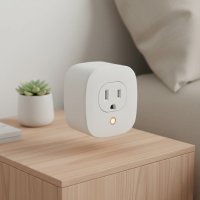
Have you ever looked at your monthly electricity bill and wondered where all that money is really going? You turn off the lights, you run the dishwasher on eco-mode, but the numbers still seem to climb. The culprit is often invisible: power-hungry appliances and “energy vampires” silently draining electricity in the background. A smart plug with energy monitoring is the key to uncovering these hidden costs, giving you the power to take control of your home’s energy consumption, save money, and build a more efficient household.
As the main content creator for Kjooz and with over a decade of hands-on experience in smart home technology, I’ve helped thousands of users transform their homes with simple, effective devices. This guide will walk you through everything you need to know about these incredibly useful gadgets.
What Exactly Is a Smart Plug with Energy Monitoring?
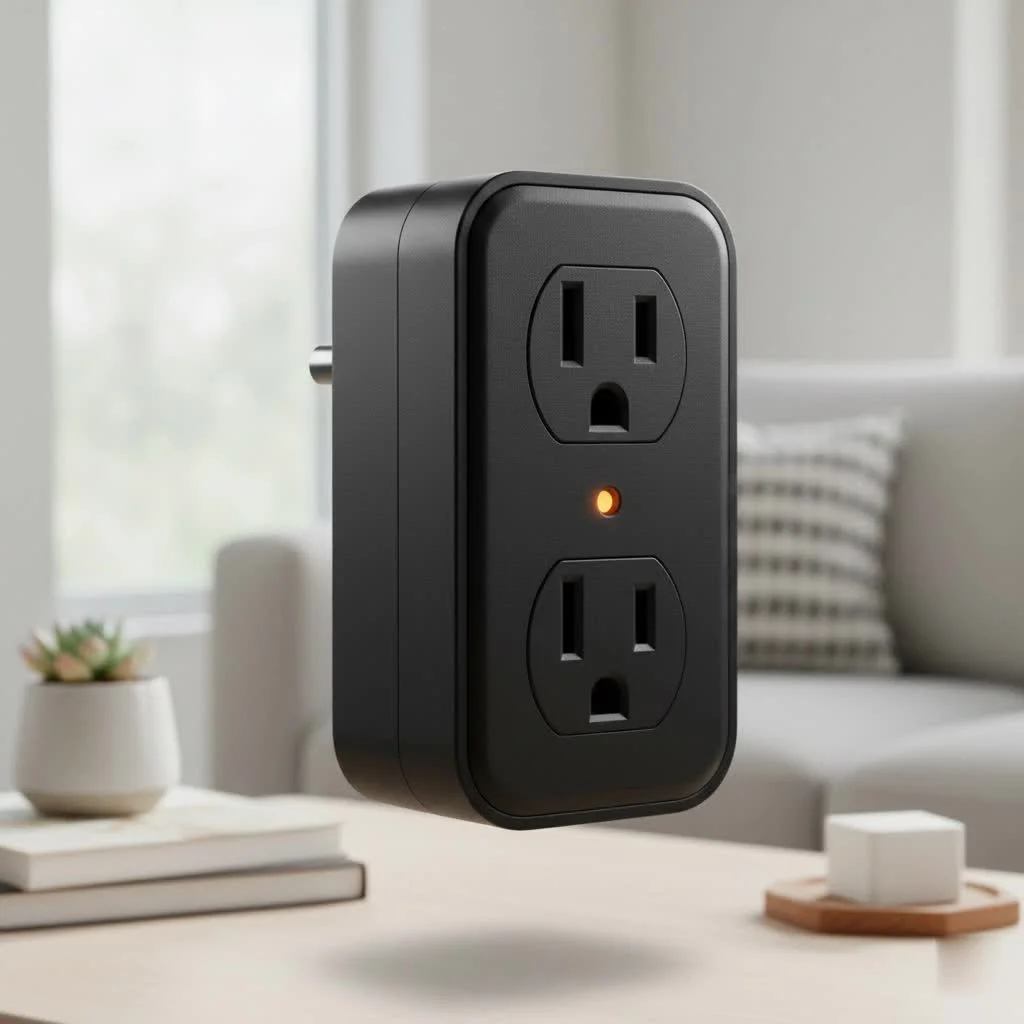
At its core, a smart plug is a small adapter that you place between an appliance’s power cord and the wall outlet. It connects to your home’s Wi-Fi network, allowing you to turn the appliance on or off remotely using a smartphone app or voice commands. A smart plug with energy monitoring, however, takes this a giant leap further. It includes internal hardware that actively measures the amount of electricity flowing through it to the connected device.
This means it doesn’t just offer on/off control; it provides you with detailed data about how much power that specific appliance is using in real-time and over time. It’s the difference between knowing a light is on and knowing exactly how much that light costs you per hour, day, or month.
How Do These Plugs Actually Measure Energy?
It sounds complex, but the technology inside is quite elegant. Most energy-monitoring smart plugs use a small, built-in component called a current sensor or current transformer.
- Sensing the Flow: This sensor measures the magnetic field generated by the electrical current flowing to your appliance.
- Calculating Power: The plug’s internal chipset combines this current data with the standard voltage of your home’s electrical system (e.g., 120V in the US) to calculate the power consumption in watts (W).
- Sending the Data: This information is then sent over your Wi-Fi network to a companion app on your smartphone. The app translates the raw data into easy-to-understand graphs, charts, and even cost estimates.
This process happens continuously, giving you a live look at your energy usage whenever you open the app.
The Real-World Benefits of Monitoring Your Energy
Why should you invest in a smart plug with energy monitoring over a standard one? The benefits go far beyond simple convenience and can have a significant impact on your wallet and your peace of mind.
Identify and Slay “Energy Vampires”
|
Our Picks for the Best Smart Plug in 2026
As an Amazon Associate I earn from qualifying purchases.
|
||
| Num | Product | Action |
|---|---|---|
| 1 | GHome Smart Plug, WiFi Smart Plugs Work with Alexa and Google Home, Smart Outlet Timer with APP Remote Control, 2.4GHz Wi-Fi Only, No Hub Required, ETL FCC Listed |

|
| 2 | Kasa Smart Plug HS103P4, Smart Home Wi-Fi Outlet Works with Alexa, Echo, Google Home & IFTTT, No Hub Required, Remote Control, 15 Amp, UL Certified, 4-Pack, White |
|
| 3 | EIGHTREE Smart Plug, Smart Home WiFi Outlet Works with Alexa & Google Home, Smart Socket with Remote Control & Timer Function, 2.4GHz WiFi Only, 4 Packs |
|
| 4 | Legrand Radiant® Wi-Fi Matter Smart Plug Matter Hub Required 15A, Easy Setup, Enhanced Compatibility with Apple HomeKit, Google Home, Alexa & SmartThings, Easy Wi-Fi Connectivity w/ Matter (1 Pack) |
|
| 5 | Kasa Smart Plug Mini 15A, Apple HomeKit Supported, Smart Outlet Works with Siri, Alexa & Google Home, UL Certified, App Control, Scheduling, Timer, 2.4G WiFi Only, 4 Count (Pack of 1) (EP25P4), White |
|
| 6 | Linkind Matter Smart Plug, Work with Apple Home, Siri, Alexa, Google, SmartThings, Smart Home Smart Outlet Timer 15A/1800W, APP Remote Control & Schedule, ETL & FCC Certified, 2.4G Wi-Fi Only, 4 Pack |
|
| 7 | Govee Smart Plug, WiFi Plugs Work with Alexa & Google Assistant, Smart Outlet with Timer & Group Controller, WiFi Outlet for Home, No Hub Required, ETL & FCC Certified, 2.4G WiFi Only, 4 Pack |
|
| 8 | EIGHTREE Smart Plug 2025 Upgrade to 15A, Bluetooth & Wi-Fi Outlet Plug Dual Connection, Voice Control, Remote Control Outlet Timer Indoor, Smart Plugs That Work with Alexa & Google, 2.4GHz Wi-Fi Only |
|
| 9 | Kasa Smart Plug HS103P2, Smart Home Wi-Fi Outlet Works with Alexa, Echo, Google Home & IFTTT, No Hub Required, Remote Control,15 Amp,UL Certified, (Pack of 2) White |
|
| 10 | Kasa Smart Plug Ultra Mini 15A, Smart Home Wi-Fi Outlet Works with Alexa, Google Home & IFTTT, No Hub Required, UL Certified, 2.4G WiFi Only, 2 Count (Pack of 1)(EP10P2) , White |
|
Energy vampires, also known as phantom loads, are devices that continue to draw power even when they are turned “off.” Think of your TV’s standby light, your coffee maker’s clock, or your game console waiting for an update. These small draws add up. By plugging these devices into an energy-monitoring plug, you can pinpoint exactly which ones are the worst offenders and use the plug’s scheduling features to cut their power completely when not in use.
Make Informed Decisions to Save Money
Data is power. When you see that your old space heater is costing you $2 an hour to run, you can make an informed decision to upgrade to a more efficient model. The app’s historical data can reveal patterns you never knew existed.
“A smart plug with energy monitoring is often the first step my clients take toward true energy consciousness. It turns an abstract utility bill into tangible, actionable data. Seeing that your entertainment center costs $15 a month just on standby power is a powerful motivator for change.”
— David Chen, Kjooz Smart Home Integration Specialist
Enhance Home Safety and Peace of Mind
Have you ever left the house and worried if you left the iron on? With a smart plug, you can check its power status from your phone. If it’s drawing power, you know it’s on and can turn it off immediately from anywhere in the world. This is also great for monitoring if kids are watching TV instead of doing homework or for ensuring potentially hazardous devices are off when they should be.
How to Choose the Best Smart Plug for Your Needs
Not all smart plugs are created equal. Here are the key factors to consider before you buy.
1. Smart Home Compatibility
Ensure the plug works with your existing ecosystem. The most common are:
- Amazon Alexa: For voice control via Echo devices.
- Google Assistant: For voice control via Google Home/Nest devices.
- Apple HomeKit: For integration with Siri and the Apple Home app.
Most plugs support Alexa and Google Assistant, while HomeKit compatibility can be less common and sometimes more expensive.
2. The App Experience
The app is where you’ll interact with the energy data, so it needs to be user-friendly. Look for an app that provides:
- Real-time monitoring: Shows you the current wattage being used.
- Historical data: Displays usage by day, week, and month.
- Cost estimation: Allows you to input your electricity rate (e.g., cents per kWh) to see real monetary costs.
- Data export: A bonus feature that lets you export data to a spreadsheet for deeper analysis.
3. Power Rating and Safety Certifications
This is crucial for safety. Check the plug’s maximum power rating (usually in watts or amps). Never use a plug with an appliance that exceeds this rating. For example, high-draw appliances like large space heaters or air conditioners require a heavy-duty plug (e.g., 15A or 1800W).
Always look for safety certifications like UL or ETL. These marks indicate that the product has been independently tested and meets established safety standards.
Frequently Asked Questions (FAQ)
How accurate is the energy monitoring on a smart plug?
For most consumer purposes, they are very accurate. They typically have a small margin of error (around 1-2%), which is more than sufficient for identifying high-consumption devices and tracking general usage trends. They are not utility-grade meters but are excellent tools for home use.
Do smart plugs use a lot of energy themselves?
No, they are incredibly efficient. A smart plug itself typically consumes less than 1 watt of power to maintain its Wi-Fi connection and internal functions. The energy it helps you save far outweighs its own minimal consumption.
Can I use a smart plug with energy monitoring on a power strip?
Yes, you can plug a power strip into a smart plug. The plug will then measure the total energy consumption of all devices connected to that power strip. This is a great way to monitor an entire workstation or entertainment center at once.
Do I need a special smart home hub to use one?
Most modern smart plugs connect directly to your home’s Wi-Fi network and do not require a separate hub. However, some plugs use other protocols like Zigbee or Z-Wave, which do require a compatible hub (like a Samsung SmartThings or Amazon Echo with a built-in hub). Wi-Fi is the simplest option for beginners.
The Final Verdict: An Investment in a Smarter Future
A smart plug with energy monitoring is more than just a gadget; it’s a window into your home’s energy habits. It provides the knowledge you need to make meaningful changes that can lower your bills, reduce your carbon footprint, and give you greater control over your home. The initial investment is small, but the potential savings and insights gained are invaluable. Take the first step today—plug in, tune in, and start saving.
Smart home that does not lock you in
Free PDF — protocol compatibility matrix for 30 hubs and devices.