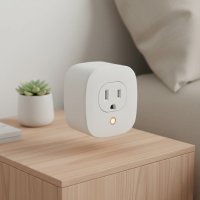
Welcome to Kjooz, where we demystify smart home technology. With over a decade of hands-on experience, I’ve seen countless gadgets promise to revolutionize our homes. Yet, for years, a simple problem persisted: fragmentation. You’d buy a smart device, only to find it worked with Google but not Apple, or Alexa but not Samsung. The dream of a seamless smart home felt distant. That is, until now. The introduction of the Matter smart plug isn’t just another upgrade; it’s the key to unlocking a truly unified, simple, and future-proof smart home.

If you’ve ever felt overwhelmed by compatibility charts and competing ecosystems, you’re in the right place. We’ll break down exactly what Matter is, why it’s a game-changer for devices like smart plugs, and how you can get started.
The Old Problem: Walled Gardens in Your Smart Home
For years, the smart home industry has been like a collection of exclusive clubs. Amazon Alexa, Google Home, and Apple HomeKit were the biggest players, each with its own set of rules and compatible devices. This created “walled gardens.” A smart plug that worked flawlessly with Alexa would be useless if you later decided to switch to Apple’s HomeKit.
This forced users into a difficult choice:
- Pledge allegiance: You had to commit to one ecosystem, limiting your choice of devices.
- Juggle multiple apps: You might use the Google Home app for your lights and a separate app for your smart plugs.
- Seek complex workarounds: Tech-savvy users relied on third-party services like IFTTT to build bridges between these walled gardens, but these solutions were often slow and unreliable.
This complexity was a major barrier for many people. The promise of a “smart” home often felt anything but.
What is Matter? The Universal Translator for Your Devices
Imagine if every person in the world could suddenly understand each other perfectly. That’s what Matter is for smart home devices. Matter is not a brand or an ecosystem; it’s a universal connectivity standard. Developed collaboratively by hundreds of companies, including giants like Apple, Amazon, Google, and Samsung, its goal is simple: to make smart devices from different manufacturers work together seamlessly.
At its core, Matter is built on four key principles:
- Simplicity: Device setup is as easy as scanning a QR code.
- Interoperability: A Matter-certified device will work with any Matter-certified controller.
- Reliability: It leverages robust technologies like Thread and Wi-Fi for fast, stable local communication.
- Security: With a strong emphasis on security from the ground up, your network stays protected.
A Matter smart plug is simply a smart plug built to this new standard. It speaks the universal language of Matter, freeing you from the walled gardens of the past.
How a Matter Smart Plug Actually Works
So, what’s the magic behind the curtain? A Matter smart plug primarily uses two communication technologies:
- Wi-Fi: Used for high-bandwidth applications and to connect directly to your home router. Many initial Matter devices use Wi-Fi for its ubiquity.
- Thread: This is where things get really interesting. Thread is a low-power mesh networking protocol designed specifically for smart home devices. Instead of every device connecting to your router, Thread devices can connect to each other, creating a self-healing, incredibly responsive, and reliable network that gets stronger with every device you add.
The setup process is where you’ll see the first major benefit. Gone are the days of downloading a specific manufacturer’s app and hoping it connects to your Wi-Fi. With Matter, the process is standardized:
- Open your preferred smart home app (e.g., Apple Home, Google Home, Amazon Alexa).
- Select “Add a device.”
- Scan the Matter QR code on the plug itself.
- Your home hub takes care of the rest, securely adding it to your network.
“Matter fundamentally shifts the user experience from ‘Will this work with my system?’ to ‘This will just work.’ For the average consumer, this removes the single biggest point of friction that has held back smart home adoption for years.”
– David Chen, Smart Home Integration Specialist
One of its most powerful features is Multi-Admin Control. This means a single Matter smart plug can be controlled by Apple Home, Google Home, and Amazon Alexa simultaneously. Someone in your family can use their iPhone to turn off a lamp, while another uses a Google Nest Hub to do the same. No workarounds, no conflicts—it just works.
Key Benefits of Choosing a Matter Smart Plug
|
Our Picks for the Best Smart Plug in 2026
As an Amazon Associate I earn from qualifying purchases.
|
||
| Num | Product | Action |
|---|---|---|
| 1 | Kasa Smart Plug Mini 15A, Apple HomeKit Supported, Smart Outlet Works with Siri, Alexa & Google Home, UL Certified, App Control, Scheduling, Timer, 2.4G WiFi Only, 4 Count (Pack of 1) (EP25P4), White |

|
| 2 | GHome Smart Plug, WiFi Smart Plugs Work with Alexa and Google Home, Smart Outlet Timer with APP Remote Control, 2.4GHz Wi-Fi Only, No Hub Required, ETL FCC Listed |
|
| 3 | EIGHTREE Smart Plug, Smart Home WiFi Outlet Works with Alexa & Google Home, Smart Socket with Remote Control & Timer Function, 2.4GHz WiFi Only, 4 Packs |
|
| 4 | Linkind Matter Smart Plug, Work with Apple Home, Siri, Alexa, Google, SmartThings, Smart Home Smart Outlet Timer 15A/1800W, APP Remote Control & Schedule, ETL & FCC Certified, 2.4G Wi-Fi Only, 4 Pack |
|
| 5 | EIGHTREE Smart Plug 2025 Upgrade to 15A, Bluetooth & Wi-Fi Outlet Plug Dual Connection, Voice Control, Remote Control Outlet Timer Indoor, Smart Plugs That Work with Alexa & Google, 2.4GHz Wi-Fi Only |
|
| 6 | Kasa Smart Plug HS103P4, Smart Home Wi-Fi Outlet Works with Alexa, Echo, Google Home & IFTTT, No Hub Required, Remote Control, 15 Amp, UL Certified, 4-Pack, White |
|
| 7 | Kasa Smart Plug HS103P2, Smart Home Wi-Fi Outlet Works with Alexa, Echo, Google Home & IFTTT, No Hub Required, Remote Control,15 Amp,UL Certified, (Pack of 2) White |
|
| 8 | Govee Smart Plug, WiFi Plugs Work with Alexa & Google Assistant, Smart Outlet with Timer & Group Controller, WiFi Outlet for Home, No Hub Required, ETL & FCC Certified, 2.4G WiFi Only, 4 Pack |
|
| 9 | Kasa Smart Plug Ultra Mini 15A, Smart Home Wi-Fi Outlet Works with Alexa, Google Home & IFTTT, No Hub Required, UL Certified, 2.4G WiFi Only, 2 Count (Pack of 1)(EP10P2) , White |
|
| 10 | Legrand Radiant® Wi-Fi Matter Smart Plug Matter Hub Required 15A, Easy Setup, Enhanced Compatibility with Apple HomeKit, Google Home, Alexa & SmartThings, Easy Wi-Fi Connectivity w/ Matter (1 Pack) |
|
- True Interoperability: This is the headline feature. Buy any Matter smart plug with confidence, knowing it will integrate with your existing (and future) Matter-compatible systems.
- Future-Proof Your Home: Investing in Matter devices means you’re not locked into a single brand. As you grow your smart home, you can choose the best device for the job, regardless of the manufacturer.
- Unmatched Simplicity: The QR code-based setup is a breath of fresh air. It makes adding a new device a 30-second process, not a 10-minute troubleshooting session.
- Enhanced Speed and Reliability: By operating locally over your home network (especially with Thread), commands are executed almost instantly. Turning on a light is as fast as flipping a physical switch because the command doesn’t have to travel to a cloud server and back.
- Improved Security: Matter’s security architecture is baked in, ensuring that communication between your devices is authenticated and encrypted, providing peace of mind.
Choosing the Right Matter Smart Plug
As Matter becomes more popular, more options will hit the market. Here’s what to look for when choosing a Matter smart plug:
| Feature | Wi-Fi Based | Thread Based | What to Consider |
|---|---|---|---|
| Connectivity | Connects directly to your router. | Connects via a Thread mesh network. | Thread offers better reliability and range as you add more devices, but requires a Thread Border Router. Wi-Fi is simpler if you have strong coverage. |
| Hub Requirement | No extra hub needed, but still needs a Matter Controller (e.g., smart speaker). | Requires a Thread Border Router (e.g., HomePod Mini, Nest Hub 2nd Gen). | Many modern smart speakers and hubs already have this built-in, so you may already own one. |
| Energy Monitoring | A premium feature on some models. | Also a premium feature. | If you want to track the electricity usage of an appliance, look for a plug that explicitly offers this feature. |
| Size & Shape | Can be bulky. | Often more compact. | Make sure the plug isn’t so large that it blocks the second outlet. “Mini” or “compact” designs are ideal. |
Step-by-Step: How to Set Up Your First Matter Smart Plug
Ready to take the plunge? Here’s a simple, universal guide to getting your first Matter smart plug up and running.
Prerequisites:
- A Matter-certified smart plug. Look for the Matter logo on the box.
- A smartphone with your chosen smart home app (Apple Home, Google Home, etc.).
- A Matter Controller. This is the “brain” of your system. Examples include an Apple HomePod/HomePod mini, Google Nest Hub (2nd gen or Max), or Amazon Echo (4th gen).
The Steps:
- Plug It In: Unbox your Matter smart plug and plug it into a power outlet. A small light should indicate that it’s powered on and ready for setup.
- Find the Code: Locate the Matter QR code. It will be on the device itself and often on a card in the box. Keep this safe.
- Open Your App: Launch your primary smart home app. For this example, let’s use Apple Home.
- Add Accessory: Tap the ‘+’ icon and select “Add Accessory.”
- Scan the Code: Your phone’s camera will activate. Scan the Matter QR code on the plug.
- Follow Prompts: The app will instantly recognize the device. It will ask you to assign it to a room (e.g., “Living Room”) and give it a name (e.g., “Floor Lamp”).
- Done! That’s it. Your plug is now fully integrated into your home. You can control it with your voice, add it to scenes, and set schedules.
If you want to add it to another platform (like Google Home), simply open that app and repeat the “Add a device” process. It will recognize that the plug is already on the network and add it seamlessly.
Frequently Asked Questions (FAQ)
Do I need a hub for a Matter smart plug?
You need a device that acts as a Matter Controller. If your plug uses Thread, this device must also be a Thread Border Router. The good news is that many popular smart speakers and hubs, like the Apple HomePod mini or the latest Amazon Echo, fill both roles.
Can I use a Matter plug with just my phone?
No. For the initial setup and to enable remote control, a Matter Controller (hub) that is always on and connected in your home is required.
Are my old, non-Matter smart plugs obsolete?
Not at all! Your existing Wi-Fi plugs that work with Alexa or Google will continue to function as they always have. Matter is about the future of new devices, not erasing the past. Some manufacturers are even updating older devices to support Matter via firmware.
Is a Thread-based Matter smart plug better than a Wi-Fi one?
For a single plug, the difference may be minimal. However, as you build out your smart home with more devices (lights, sensors, locks), a Thread network becomes significantly more robust and responsive than a Wi-Fi network crowded with dozens of devices.
Where can I find the Matter logo?
It’s a distinctive logo with three rounded arrows pointing toward a central point. You should look for it on the product packaging and in the product description online to ensure you are buying a compatible device.
A Simpler, Smarter Future Awaits
The Matter smart plug represents more than just a new piece of hardware; it’s a commitment to a better user experience. It’s the fulfillment of the original smart home promise: technology that works for you, without the headaches of incompatibility. By breaking down the walled gardens, Matter empowers you to build the smart home you want, with the brands you love, all working together in perfect harmony. The next time you’re looking to make an appliance smart, don’t just look for a smart plug—look for the Matter logo. Your future self will thank you.
Smart home that does not lock you in
Free PDF — protocol compatibility matrix for 30 hubs and devices.